12 best AI candidate outreach platforms for recruiters

Cold outreach is the most-attempted, most-ignored part of recruiting.
The candidate gets 30 of these messages a week. Most read like form-fill spam. The recruiter spends two hours writing each one and gets a 4% reply rate for the effort.
The right outreach platform fixes both sides. Personalization at scale for the recruiter. Messages that don't feel templated for the candidate. The reply rate moves from 4% to 15-20% when the tool actually does its job.
We tested 12 of the most-used AI candidate outreach platforms in 2026. Each section covers what the platform actually automates, where it falls short, and which kind of team it fits.
All 12 platforms at a glance
| Platform | Best for | Pricing |
|---|---|---|
| Metaview | AI sourcing plus structured interview reports for the conversations that follow | Free with a work email |
| Gem | High-volume outbound with deep sequence analytics | Quote-based |
| HireEZ | Cross-platform sourcing plus automated outreach | Quote-based |
| SeekOut | Cleared and specialized talent outreach at scale | From $833/seat/month |
| Fetcher | Always-on outbound that runs without daily recruiter input | Quote-based |
| Eightfold | Enterprise outreach across recruiting and internal mobility | Quote-based |
| Loxo | Agency outreach with built-in CRM and SMS | Free tier; paid on request |
| Humanly | Conversational AI for high-volume hourly outreach | Quote-based |
| Recruiterflow | Automation-first outreach for agency CRMs | From $99/user/month |
| SourceWhale | AI productivity modules for staffing and exec search | Quote-based |
| Interseller | Email finding plus outbound sequences for agency recruiters | From $100/user/month |
| Findem | Attribute-based outreach for non-obvious role briefs | Quote-based |
1. Metaview
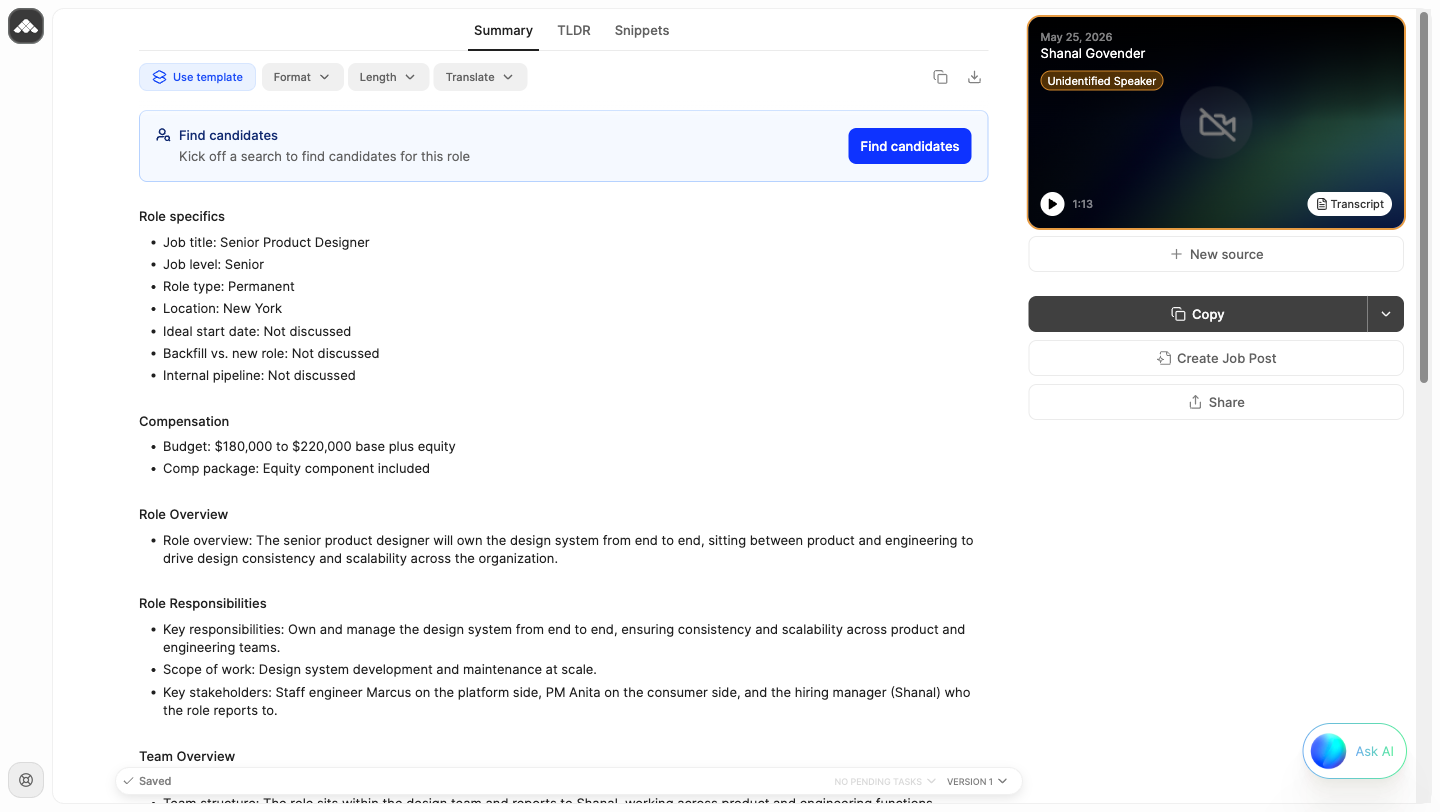
Best for: teams whose outreach is the start of the workflow, not the end.
Metaview is the AI recruiting platform that combines outreach with the layer most outreach tools ignore: what happens when the candidate replies.
The AI Sourcing layer finds candidates, drafts personalized outreach, and tracks reply analytics. The interview intelligence layer captures the conversations that follow and writes structured candidate reports into your ATS.
That joint workflow is the differentiator. Other tools optimize the outreach. Metaview optimizes the full loop from first message to hiring decision.
What you get on day one:
- AI Sourcing to find off-list candidates by description.
- Drafted outreach personalized to each candidate.
- Live capture across Zoom, Google Meet, Microsoft Teams, and phone for the reply conversations.
- Structured candidate reports mapped to your interview rubric.
- Scorecard write-back to Greenhouse, Ashby, Lever, Bullhorn, and 60+ other systems via our ATS integrations.
- Free to sign up with a work email.
Metaview's reporting gave us instant market intel, so we could compete for international talent with confidence. We had a manual process going through 20 candidate scorecards and extracting that data to an Excel sheet. Now we have a report in two clicks. That's a completely different story.”
Our pick for: any recruiting team that wants outreach plus the structured signal from the conversations it produces.
2. Gem
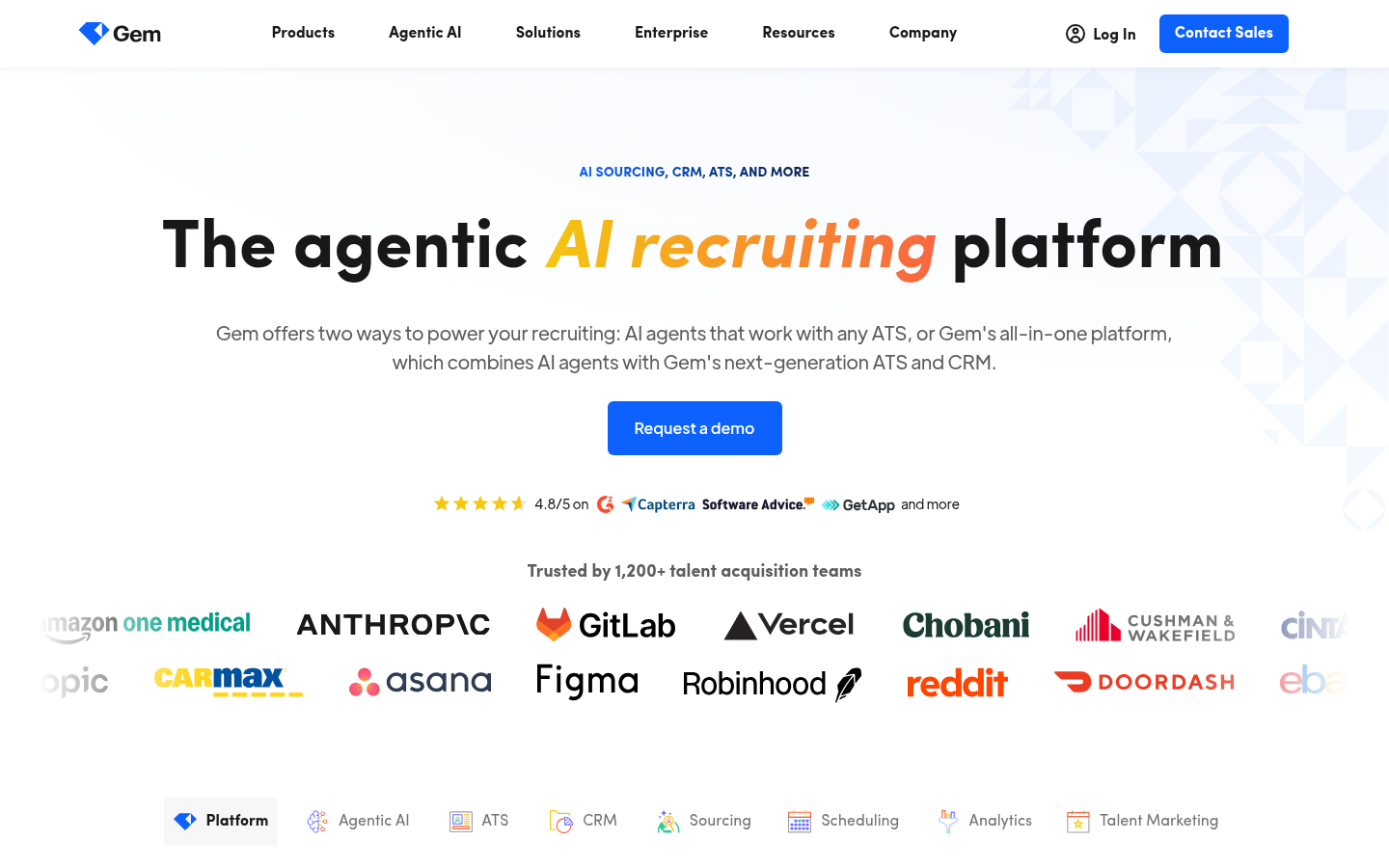
Best for: in-house teams running heavy outbound campaigns.
Gem is the category leader on outbound analytics. The reply-rate dashboards, sequence-step conversion, and persona-level analytics are deeper here than anywhere else on this list.
What you get:
- 800M+ profile sourcing engine.
- Email outreach with deep sequence analytics across reply rates and conversion.
- Unified ATS plus CRM with native scheduling via ModernLoop.
- AI-led talent CRM with the Taylor AI assistant layer.
Where it falls short: Enterprise-only pricing. The all-in-one push has slowed some legacy sourcing features.
Our pick for: in-house teams hitting 500+ outbound sends per week where reply-rate analytics matter as much as volume.
3. HireEZ
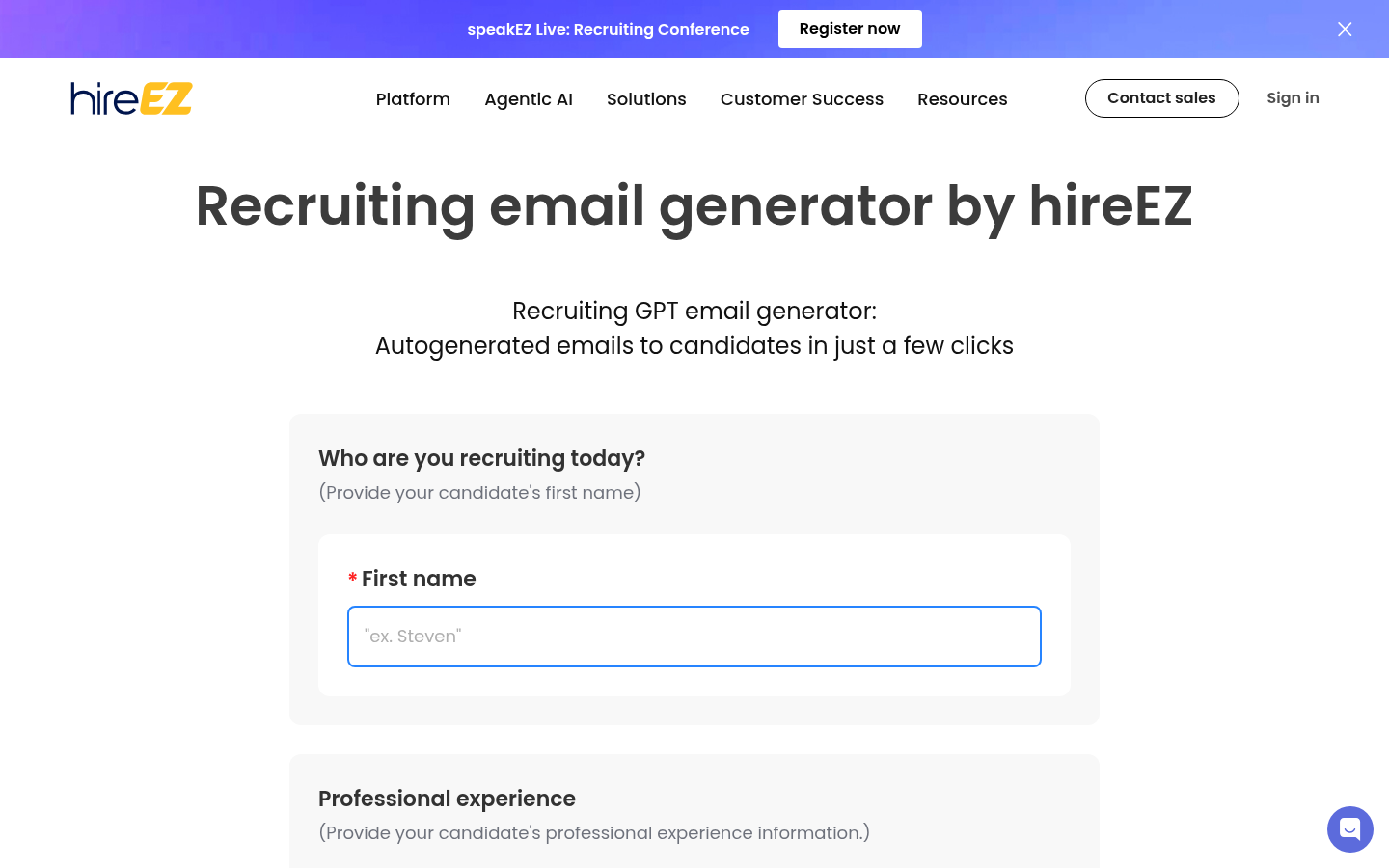
Best for: mid-to-large in-house teams sourcing across multiple networks.
HireEZ pairs cross-platform sourcing (45+ networks) with personalized outreach sequences. Strong on breadth, with AI matching that pulls candidate-specific details into every send.
What you get:
- Cross-platform sourcing engine across 750M+ profiles.
- AI-personalized email sequences.
- Native ATS integrations for Greenhouse, Lever, Workday, Bullhorn.
- Engagement analytics tied to sequence step.
Where it falls short: Contact-data accuracy is uneven. G2 reviewers consistently flag bounce rates as high as 30% on some segments. See our HireEZ alternatives roundup for budget options.
Our pick for: mid to large in-house teams where outbound volume drives the pipeline.
4. SeekOut
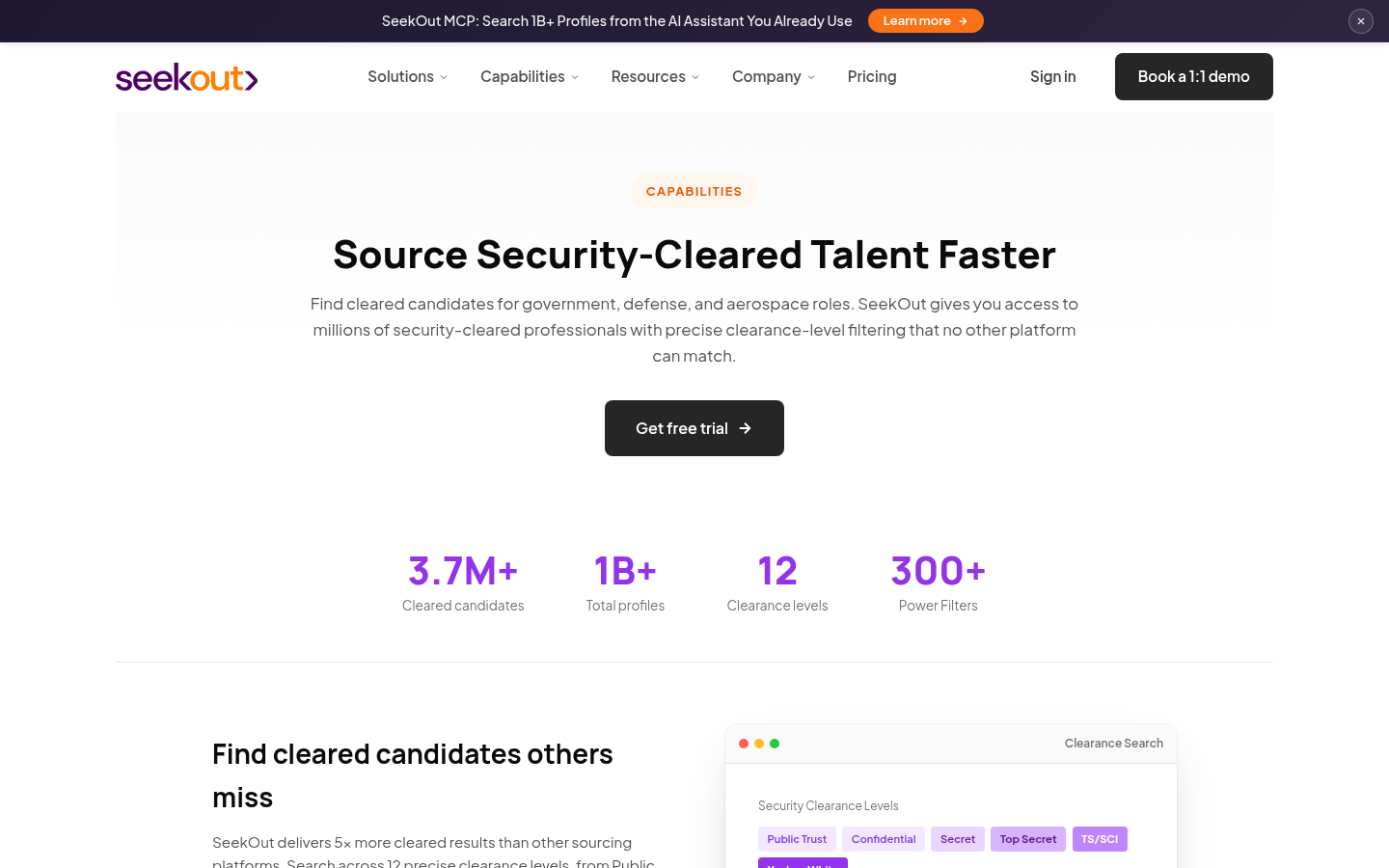
Best for: outreach to specialized talent cohorts.
SeekOut is the outreach platform with the deepest specialized filters. 1B+ profiles, 3.7M+ security-cleared profiles, and rich diversity and veteran data.
What you get:
- Full-graph sourcing plus targeted outreach.
- SeekOut Assist: paste a JD, get auto-built Boolean and outreach copy.
- ATS rediscovery on Greenhouse, Lever, Workday.
- 14-day trial available.
Where it falls short: No perpetual free tier. After the trial, paid seats run at $833 per seat per month or more.
Our pick for: defense-adjacent, cleared-civilian, and specialized technical talent outreach. See our SeekOut alternatives roundup for the wider landscape.
5. Fetcher
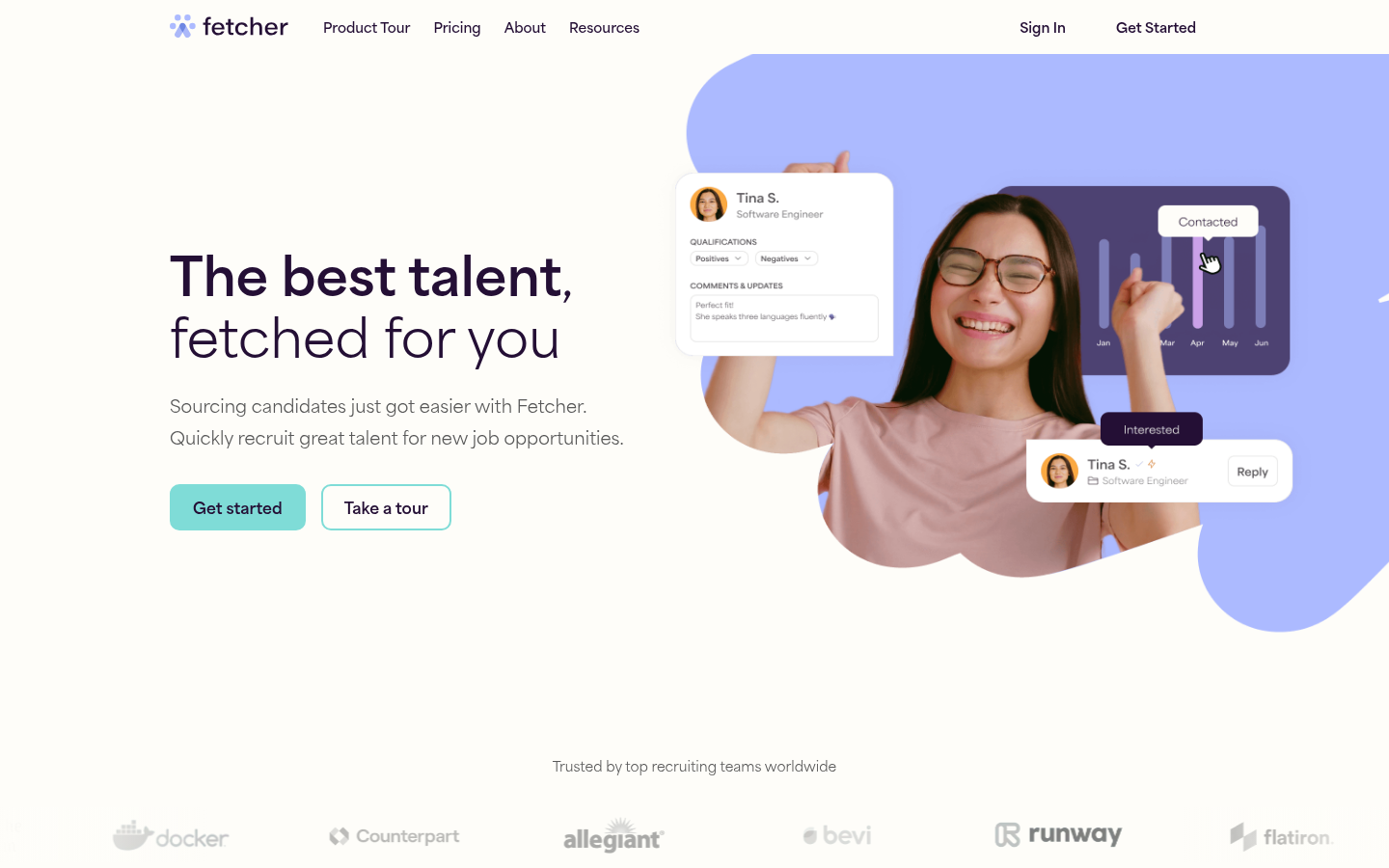
Best for: busy in-house teams that want outreach on autopilot.
Fetcher automates the full outreach cycle: sourcing, sequence sending, reply handling, and interview booking. The recruiter sets the criteria; the platform does the rest.
What you get:
- Automated candidate sourcing tuned to your role brief.
- Email outreach with sequence-based follow-ups.
- Calendar booking handled inside the platform.
- Integrations with major ATSs for handoff.
Where it falls short: The automation can miss the senior or executive outreach where the personal touch matters most.
Our pick for: in-house TA teams hiring at volume where the recruiter cannot manually personalize every outreach.
6. Eightfold
Best for: Fortune 500 talent functions running outreach plus internal mobility.
Eightfold handles enterprise outreach as one of several modules. Strong fit when outreach needs to coordinate with workforce planning and internal mobility.
What you get:
- AI talent intelligence across hiring and internal mobility.
- Skills-based candidate matching and outreach.
- Career-site personalization and outreach landing pages.
- Workforce-planning analytics on the same data layer.
Where it falls short: Enterprise-only pricing and implementation complexity. Overkill for sub-500-person teams.
Our pick for: Fortune 500 talent functions where outreach is one of many AI talent workflows.
7. Loxo
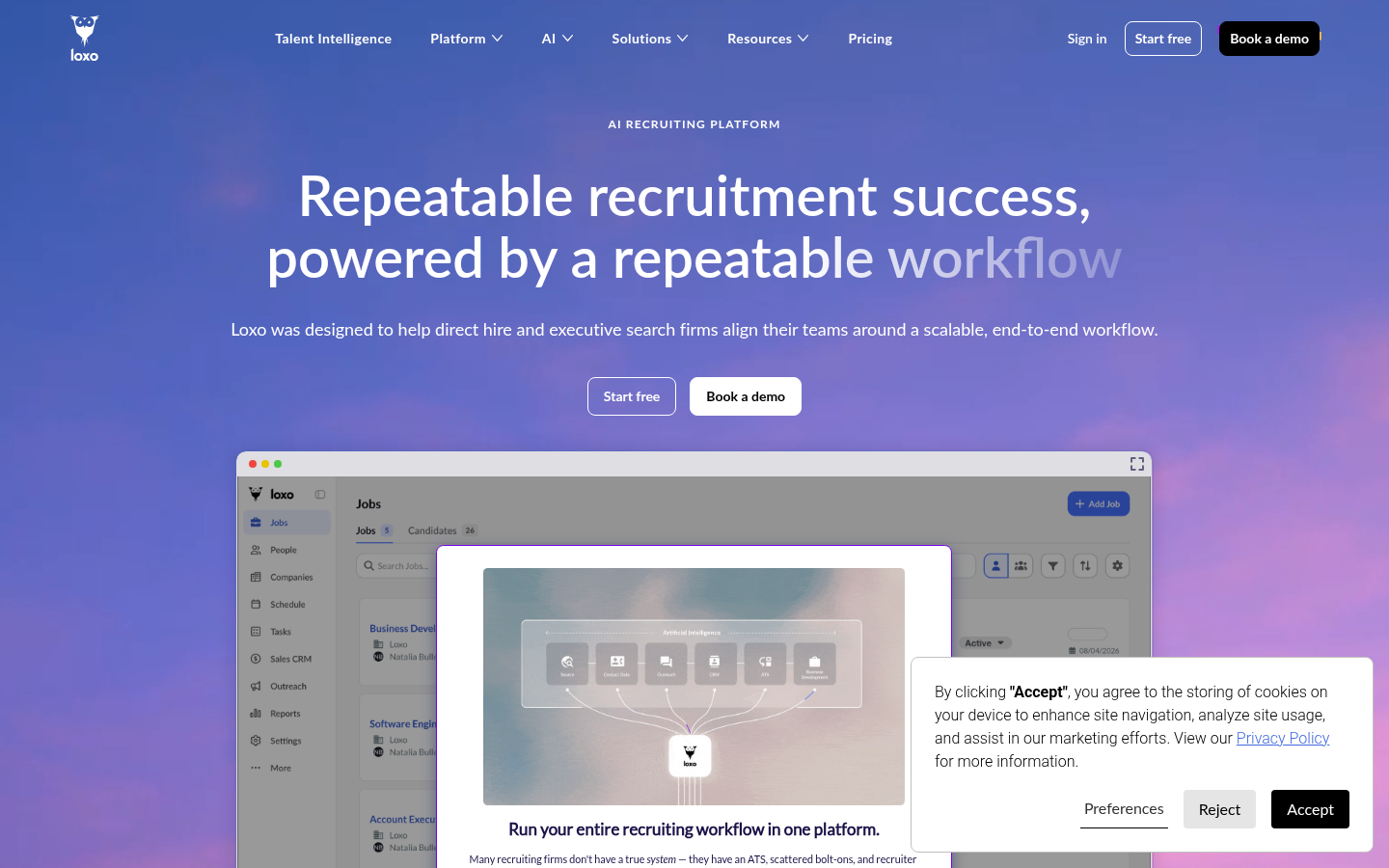
Best for: staffing agencies that want outreach plus CRM in one platform.
Loxo is the agency outreach platform that consolidates a fragmented stack. Phone, SMS, and email outreach all sit on top of an ATS and CRM that handle the rest of the agency workflow.
What you get:
- Multi-channel outreach (email, SMS, phone) in one tool.
- 1.2B+ candidate profiles for sourcing.
- AI sequencing with reply analytics.
- Bundled ATS and CRM for the broader agency workflow.
Where it falls short: Doing many things means doing fewer of them deeply. Specialist outreach tools (Gem, Interseller) still outperform on pure outreach.
Our pick for: staffing agencies that want outreach plus CRM without juggling separate vendors.
8. Humanly
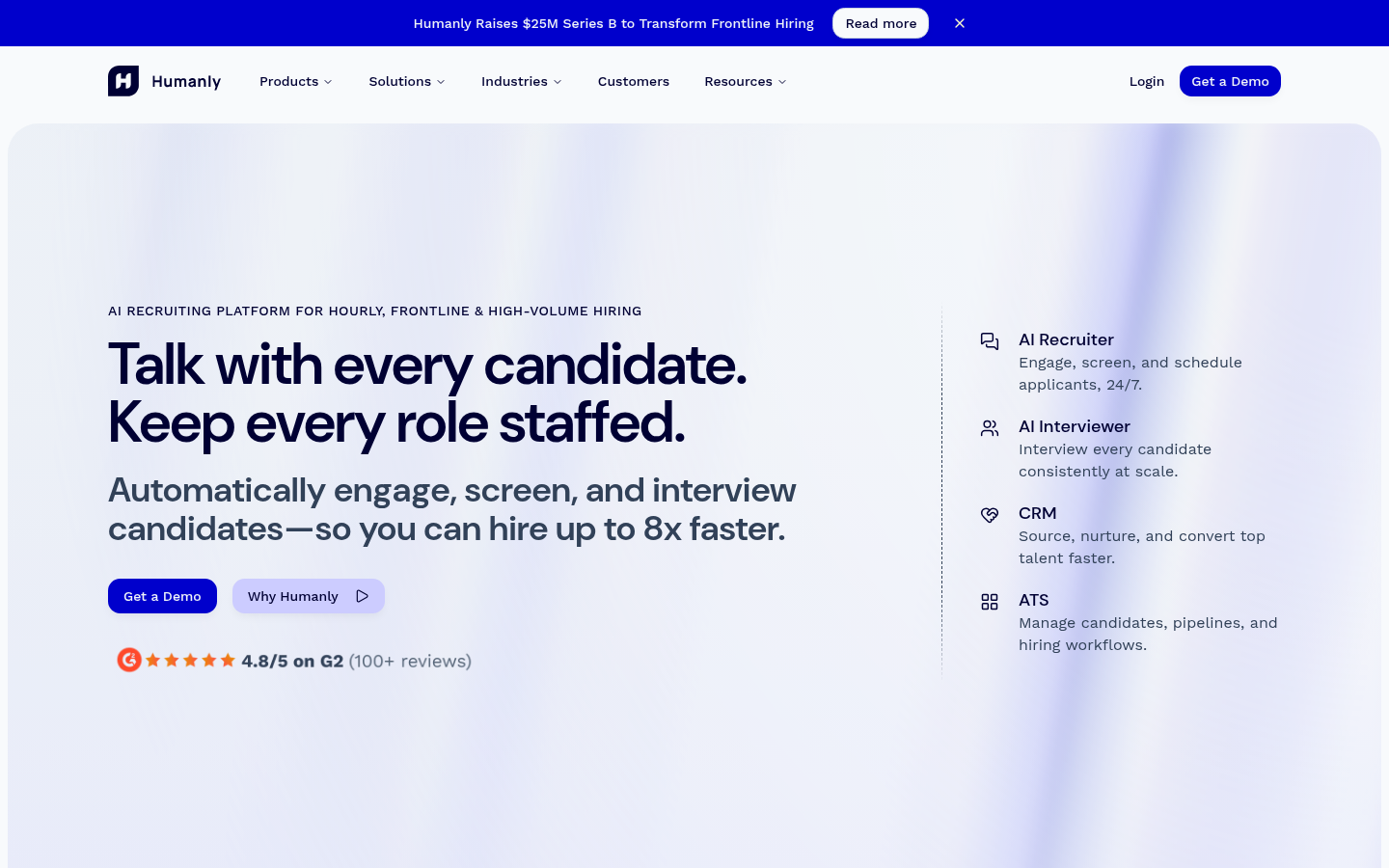
Best for: high-volume hourly hiring where conversational outreach replaces template emails.
Humanly takes outreach in a different direction. Instead of email sequences, the platform runs conversational AI across SMS, WhatsApp, and chat for candidate engagement.
What you get:
- Conversational AI for candidate outreach and engagement.
- Automated interview scheduling with reminder workflows.
- Engagement tools that reduce no-show rates.
- Integrations with major ATS platforms.
Where it falls short: Built for high-volume frontline. Not the right tool for partner-led search or executive outreach.
Our pick for: high-volume hiring teams where the bottleneck is reaching candidates fast, not personalizing each touch.
9. Recruiterflow
Best for: agencies whose competitive advantage is workflow velocity.
Recruiterflow is automation-first by design. Outreach sequences, candidate enrichment, and reply automation are core; the CRM sits underneath.
What you get:
- Multi-channel outreach sequences built into the CRM.
- Data enrichment to fill in candidate contact details.
- Native AI agents for sourcing and outreach.
- Solid Chrome extension and LinkedIn integration.
Where it falls short: The platform leans hard on automation, which can feel mechanical for senior or partner-led outreach.
Our pick for: agencies where outbound automation is the core of the service offer.
10. SourceWhale
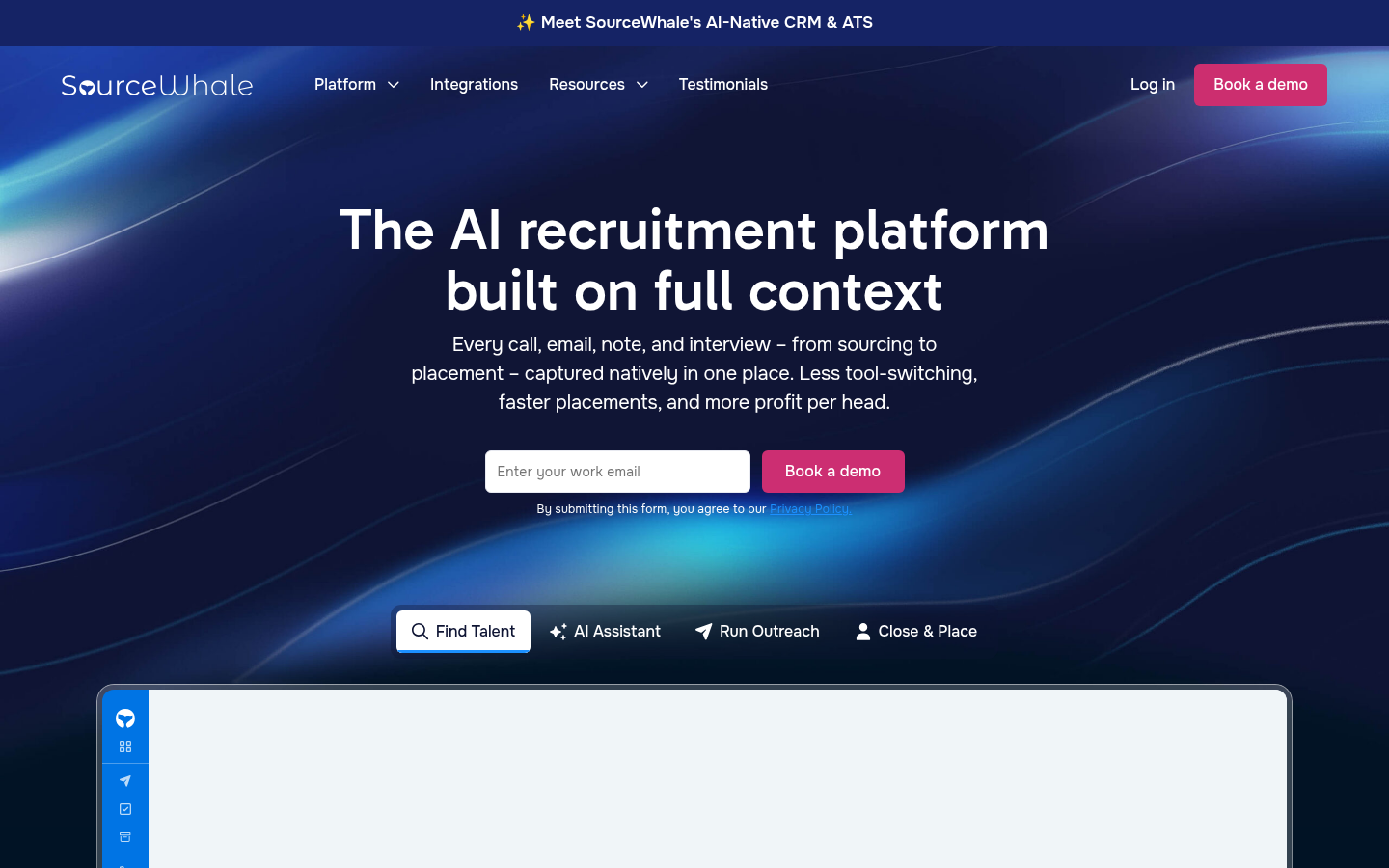
Best for: staffing and executive search firms running multi-channel outbound.
SourceWhale built its product specifically for the recruitment, staffing, and executive search market. The platform combines email, LinkedIn, and call outreach with productivity modules that recruiters use daily.
What you get:
- Multi-channel outbound across email, LinkedIn, and phone.
- AI-personalized message drafting.
- Native Chrome extension for LinkedIn workflow.
- Strong fit with agency-CRM workflows.
Where it falls short: Less depth on advanced analytics than Gem. Best for teams that prioritize multi-channel volume over reply-rate optimization.
Our pick for: executive search and specialist staffing firms doing high-touch outbound.
11. Interseller
Best for: agency recruiters who need email finding plus sequencing in one tool.
Interseller is the simpler, recruiter-first outreach tool. The product finds personal and work emails, sends sequenced campaigns, and tracks replies. No bells, no whistles, just the workflow most agency recruiters run daily.
What you get:
- Email finding for LinkedIn profiles via Chrome extension.
- Outbound sequence builder with reply tracking.
- ATS integrations for handoff once a candidate replies.
- From $100/user/month for the entry tier.
Where it falls short: Acquired by Greenhouse in 2021 and integration has been thoughtful but the product hasn't seen the AI-era investment that newer tools have.
Our pick for: Greenhouse-using agency recruiters who want native email finding and sequencing inside their ATS.
12. Findem
Best for: outreach where the role brief is more nuanced than a title.
Findem takes a different angle on outreach. Instead of searching by title and seniority, it searches by attributes the role actually requires, then personalizes outreach around those attributes.
What you get:
- Attribute-based candidate search across enriched profile data.
- Personalized outreach grounded in specific candidate attributes.
- Talent CRM with engagement signal tracking.
- Integrations with major ATSs.
Where it falls short: The attribute layer takes setup time to calibrate to a role's actual criteria.
Our pick for: enterprise TA functions where the outreach hook depends on attributes title-based search misses.
How to choose the right platform
For most teams, the highest-leverage outreach platform is Metaview. The reason isn't that Metaview has the deepest outreach analytics. It doesn't.
The reason is that outreach is just step one. The conversations that follow are where the actual hiring decisions happen.
Metaview captures both halves of the loop. The other tools optimize the outreach send; Metaview optimizes everything that happens after a candidate replies.
The other platforms fit specific contexts. Gem for in-house teams running heavy outbound where reply analytics drive the work. HireEZ for cross-platform sourcing breadth.
SeekOut for cleared and specialized talent. Fetcher for autopilot outreach. Eightfold for enterprise. Loxo for agency consolidation. Humanly for high-volume frontline conversational outreach.
Recruiterflow and SourceWhale for agency-CRM-native automation. Interseller for Greenhouse-using agencies. Findem for attribute-based outreach hooks.
For broader context on the surrounding stack, see our sourcing tools for recruiters and AI hiring tools roundups.
Frequently asked
What is an AI candidate outreach platform?
AI candidate outreach platforms automate reaching passive candidates: finding contact data, drafting personalized messages, running sequences, and tracking replies. They combine sourcing data with messaging automation and AI personalization at scale.
How do AI outreach tools avoid being marked as spam?
Reputable platforms use dedicated sending domains, gradual warm-up, SPF/DKIM/DMARC alignment, and per-candidate personalization to avoid spam. Reply rate is the best leading indicator: below 5%, the platform is filtered or candidates aren't engaging.
Can AI candidate outreach platforms find candidates who aren't on LinkedIn?
Yes. HireEZ, SeekOut, and AmazingHiring index 40+ professional networks including GitHub, Stack Overflow, Behance, Kaggle, and Crunchbase. Most modern outreach platforms also include personal email finding so you're not limited to InMail.
What happens when a candidate replies to an automated outreach message?
The reply pauses the sequence and routes the conversation to a human recruiter. Most platforms integrate with your ATS to log the reply and trigger downstream workflows. Tools like Metaview then capture the reply conversation itself as structured signal.
How long does it take to implement an AI outreach platform?
Lighter platforms (Interseller, Fetcher) run in days. Mid-market platforms (HireEZ, Gem) take 2-4 weeks for full ATS integration and sequence calibration. Enterprise platforms (Eightfold, Findem) run 6-12 weeks for global rollouts that include workforce-planning configuration.
Do AI outreach tools support outreach in languages other than English?
Most major platforms support multilingual outreach for sequence sending and reply tracking. AI personalization is strongest in English, with German, French, Spanish, and Portuguese close behind. Always test native-language sequences before scaling regional rollouts.
Bring Metaview into your hiring stack.
Live notes, structured scorecards, and ATS sync - set up in under 10 minutes.